How to process | Lactose

Lactose processing with rotary valves
Handling lactose powder may seem straightforward – until flow problems start disrupting your production process. In food and pharmaceutical environments, where hygiene, consistency and downtime reduction are essential, selecting the right rotary valve becomes a decision that determines overall process reliability.
Just like many specialty materials can challenge poorly matched equipment, lactose has its own characteristics that reveal whether a rotary valve is truly suited to the task.
Why lactose is difficult to handle
Lactose powder is:
- Fine and dusty – increasing the risk of leakage
- Hygroscopic – absorbing moisture that leads to caking
- Prone to build‑up – especially on rough surfaces
- Sensitive to inconsistent flow, resulting in bridging or irregular dosing
Poorly matched equipment can quickly lead to flow interruptions, hygiene concerns, bridging above the inlet, frequent cleaning and unplanned downtime.
What makes a rotary valve suitable for lactose?
To handle lactose effectively, the valve must support both flow stability and hygiene compliance.
Key design features include:
- Sanitary-friendly construction combining stainless-steel body, endplates and rotor, hygienic design with easy-access cleaning options and compliance with food and pharma standards.
- Smooth, polished internal surfaces to reduce sticking, build-up, and cleaning time.
- Tight clearances to ensure predictable flow and minimise dust leakage.
- Gentle feeding action to reduce product degradation and prevents excessive dust formation.
- Dust-tight sealing is essential to avoid contamination and uncontrolled emissions.
Benefits of reliable product flow
When lactose flows consistently:
- Production runs cleaner and more efficiently
- Hygiene standards are easier to maintain
- Cleaning intervals become longer
- Packaging and dosing lines operate more accurately
- Equipment life is extended due to reduced mechanical stress
Choosing the right rotary valve directly impacts process reliability, not just component performance.
Choosing the right valve
Choosing the right rotary valve isn’t just a component decision – it’s a process reliability decision. We know the challenges, and we’re here to help you choose the right solution.
Give us a call at +31252375068 of send an email to sales@tbma.com
--------------------
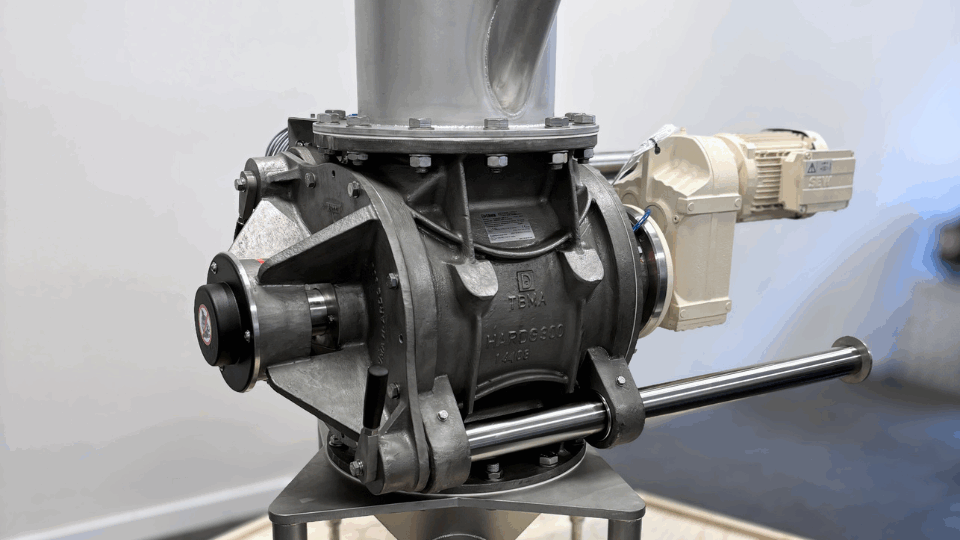
Image: H-ARDG300 rotary valve
- Application: handling lactose in a pneumatic conveying system
- Capacity: 15 t/h
- Execution: stainless-steel body, end covers and rotor; polished internal surfaces; inlet adaptor; outlet adaptor; support frame with four polished stainless-steel adjustable feet