How to process | Fish feed
Processing fish feed isn’t just about moving pellets from A to B – and that’s where the right rotary valve makes the difference.
Fish feed processing with rotary valves
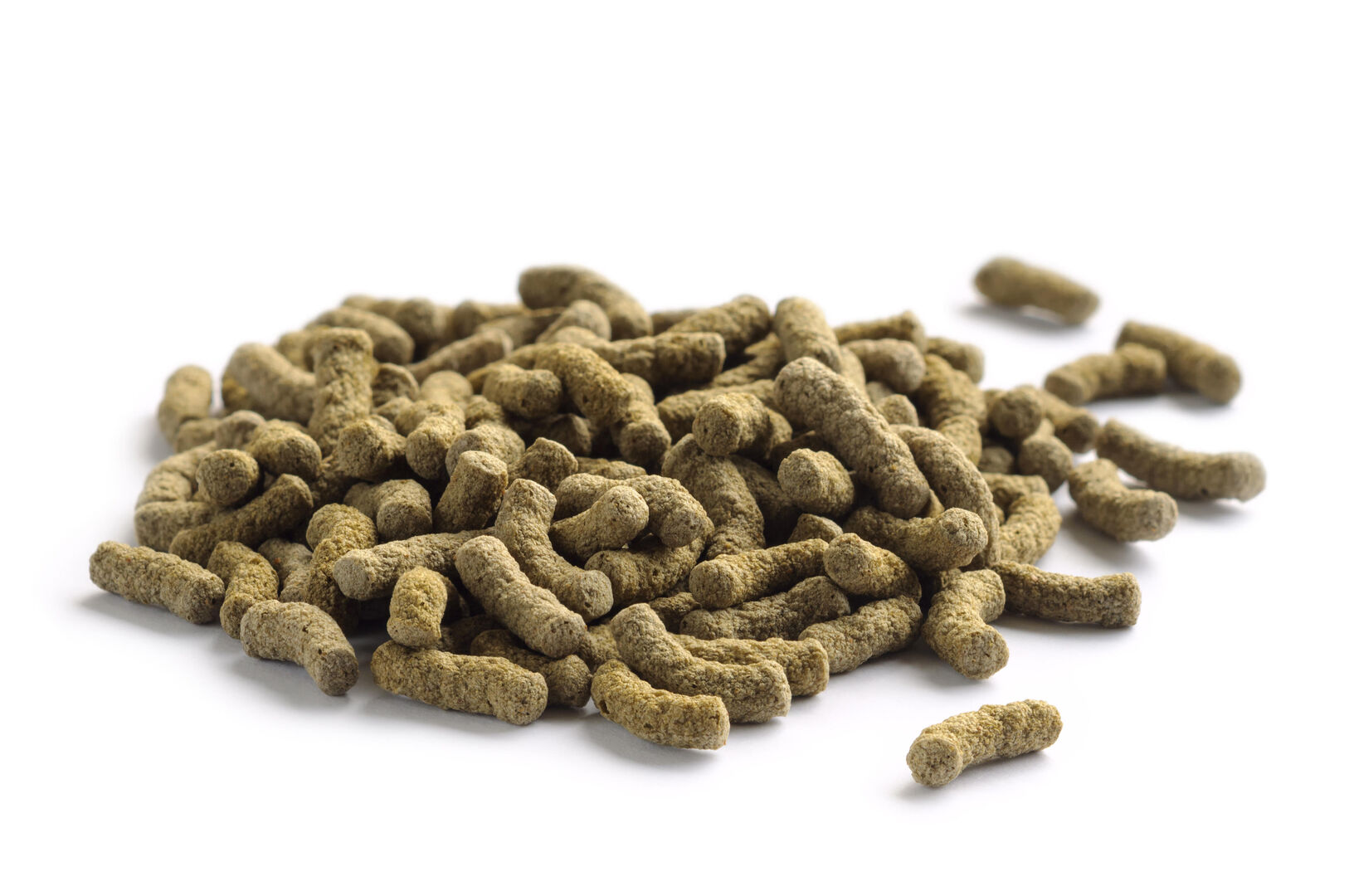
Fish feed pellets are high‑value products that must be handled gently. During processing and transport, excessive mechanical stress can lead to breakage, crumbling, and the creation of fines. This not only affects feed quality and dosing accuracy, but can also contribute to increased water pollution and reduced feeding efficiency – particularly in modern aquaculture systems and offshore feeding barges.
Rotary valves designed for aquafeed applications focus on gentle handling, reliable dosing, and robust performance. Adapted rotor designs, smooth internal geometries, and controlled discharge help ensure pellets are transferred and metered with minimal damage.
Why fish feed is difficult to handle
- Pellet breakage during feeding, dosing, or pneumatic conveying
- Inconsistent dosing caused by damaged pellets and fines
- Limited installation space on feeding barges and compact systems
- Operation in harsh, corrosive marine environments
- Need for reliable, continuous operation with minimal maintenance
Poorly matched equipment can quickly lead to feed degradation, flow interruptions, and unplanned downtime.
What makes a rotary valve suitable for fish feed?
To handle fish feed effectively, the valve must support both gentle handling, reliable dosing, and robust performance.
Key design features include:
- Gentle handling to prevent pellet damage
- Adapted rotor designs to minimise impact forces
- Smooth internal geometries for controlled discharge
- Reliable and accurate dosing into pneumatic conveying systems
- Robust construction suitable for offshore and marine conditions
- Compact designs with fewer parts for easier maintenance
Selecting the right rotary valve for fish feed means considering the material, the application, and the environmental requirements of the process.
Benefits of the right rotary valve
- Pellets remain intact during processing and transport
- Accurate and consistent feeding performance
- Reduced waste and lower environmental impact
- Improved system availability and uptime
- Strong return on investment through reduced product loss
When fish feed flows consistently and pellets remain intact, the entire process benefits.
Choosing the right valve
Choosing the right rotary valve isn’t just a component decision – it’s a process reliability decision. We know the challenges, and we’re here to help you choose the right solution.
Give us a call at +31252375068 of send an email to sales@tbma.com
--------------------
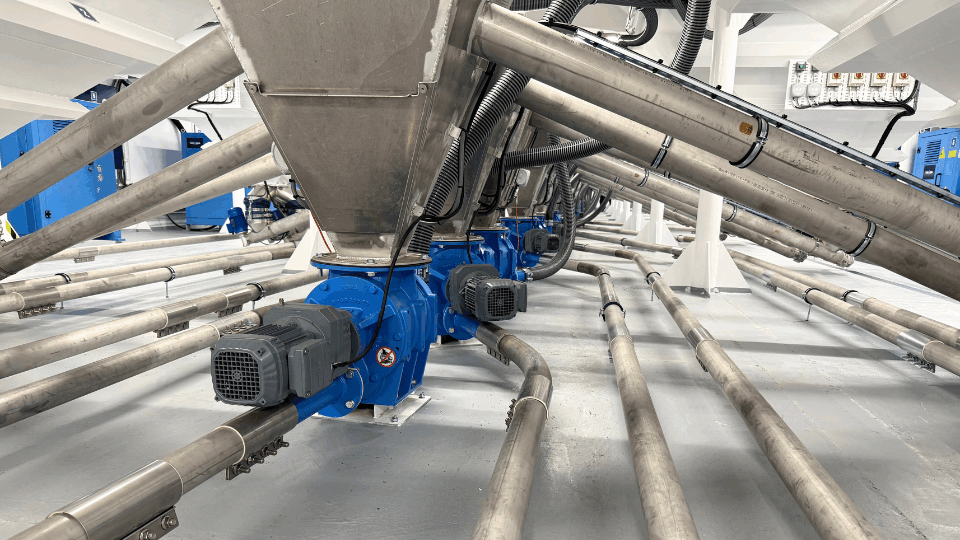
Image: H-GRD200 blow-through rotary valve
- Application: handling fish feed in a pneumatic conveying system
- Location: open sea aquafarm feeding barge
- Execution: cast iron body and end covers, and steel rotor
- Drive: direct in-line