How to process | Cocoa
Processing cocoa powder | the challenge
Cocoa powder is a fine, lightweight material that can be difficult to handle. Depending on its fat content, particle size, and environmental conditions, cocoa may bridge, compact, generate dust, and adhere to equipment surfaces.
Moisture exposure can further increase the risk of build-up and blockages. Equipment that is not designed to accommodate these material characteristics can lead to inconsistent dosing, reduced conveying efficiency, product accumulation, and unplanned downtime.
Why cocoa is difficult to handle | hygiene and product integrity
In cocoa processing, product integrity and hygiene are critical. Contamination from external sources, equipment wear, or residual product can affect flavour, colour, and overall product quality. In addition, manufacturers must comply with strict food safety and hygienic processing requirements.
This makes the rotary valve more than just a transfer device. It becomes a key control point for maintaining product purity, process consistency, and hygienic operation.
The role of the rotary valve
Key design considerations include:
- Food-grade materials suitable for hygienic processing
- Smooth internal surfaces to minimise product build-up
- Hygienic construction for easy cleaning and inspection
- Optimised rotor configurations for consistent feeding
- Effective sealing systems to reduce air leakage
- Dust-tight operation to minimise emissions and contamination risks
These features ensure reliable performance in applications such as pneumatic conveying, batching, ingredient dosing, and storage discharge.
Optimal cocoa powder flow | the result
When cocoa is handled consistently and hygienically, operations benefit from:
- Improved process efficiency
- Reduced product losses
- Lower risk of contamination
- Less downtime and maintenance
- Consistent final product quality
With the right solution in place, manufacturers can optimise productivity while protecting both product quality and food safety.
Choosing the right rotary valve | the takeaway
Choosing the right rotary valve is not just a component decision – it is a decision that directly impacts food quality, process reliability, and operational performance.
We understand the challenges of handling cocoa, and we’re here to help you choose the right solution for your application.
Give us a call at +31252375068 of send an email to sales@tbma.com
--------------------
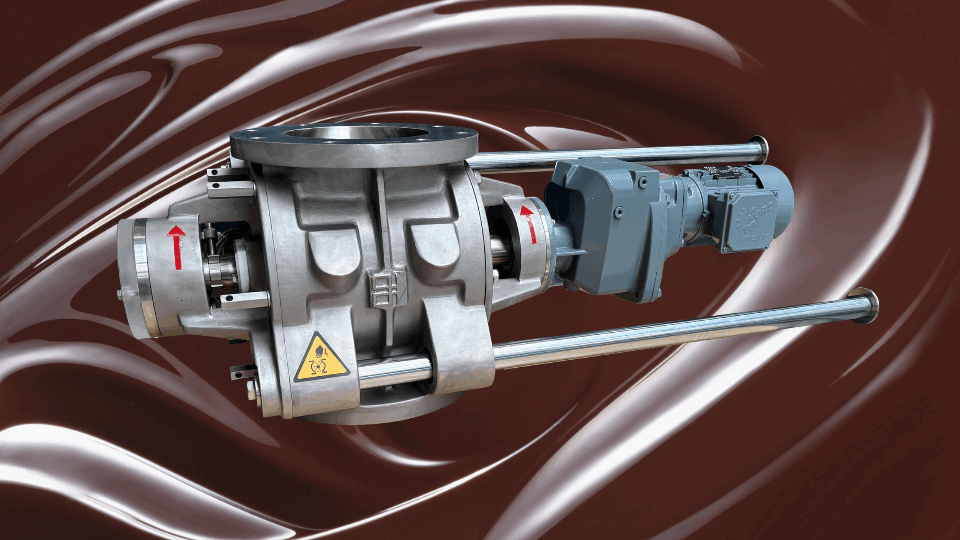
Image: H-ARDG-R2-200 rotary valve with guiding bars
- Application: handling cocoa mass
- Particle size: 6-40 mm
- Bulk density: 800 kg/m3
- Execution: stainless steel body, covers and rotor
- Execution DG: guiding rail system for quick and regular cleaning and inspection