How to process | Activated carbon
5 November 2026 | Powdered activated carbon (PAC) is widely used in municipal and industrial water treatment. However, it can be challenging to handle as a bulk solid. The right rotary valve plays a key role in maintaining a safe, accurate and reliable process.
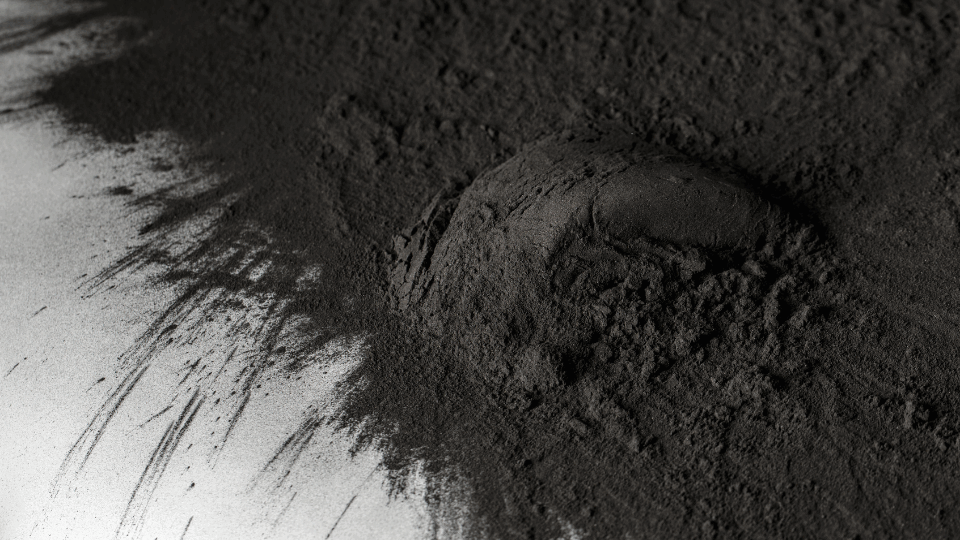
Powdered Activated Carbon
As water quality standards continue to tighten, powdered activated carbon (PAC) is becoming an increasingly important part of advanced water and wastewater treatment processes. Water utilities and industrial treatment plants rely on activated carbon to remove pharmaceutical residues, micropollutants, PFAS, pesticides and other trace contaminants that are difficult to eliminate through conventional treatment alone.
Thanks to its highly porous structure and enormous internal surface area, activated carbon is exceptionally effective at adsorbing dissolved organic compounds from water streams. However, achieving reliable treatment results is not only about selecting the right activated carbon. It also depends on how the material is stored, conveyed, dosed and prepared for use.
Why activated carbon?
Powdered activated carbon (PAC) is widely used in municipal and industrial water treatment because it effectively removes a broad range of contaminants, including:
- Pharmaceutical residues
- Micropollutants
- Pesticides
- Taste and odour compounds
- Industrial trace contaminants
- Organic compounds resistant to biological treatment
The adsorption capacity of activated carbon results from an extensive network of microscopic pores that create a huge internal surface area. This enables contaminants to bind to the carbon particles and subsequently be removed from the treatment process.
In biological wastewater treatment systems, PAC is often introduced directly into activated sludge processes, where contaminants adsorb onto the carbon particles before being separated from the water stream.
From storage to accurate dosing
Although powdered activated carbon delivers excellent adsorption performance, it can be challenging to handle as a bulk material. PAC is a fine, lightweight and dusty powder with specific flow characteristics that require careful consideration during system design.
Reliable storage, discharge, conveying and dosing are essential to maintain consistent process performance. Variations in feed rate can directly affect treatment efficiency, while poor material flow may result in bridging, rat-holing or interruptions in operation. That's why practical experience matters.
At TBMA, decades of experience in bulk solids handling are combined with practical knowledge of water treatment applications to develop integrated solutions that ensure safe and reliable processing of activated carbon throughout the entire process chain.
From storage to slurry preparation
In many water treatment plants, activated carbon is delivered in bulk and stored in dedicated silos. Reliable discharge from these silos is essential for maintaining uninterrupted operation. Rotary valves are frequently used as the first controlled discharge device, providing a consistent flow of product to downstream equipment.
After discharge, the activated carbon is accurately metered and transferred to a slurry preparation system. Here, the powder is mixed with water to create a homogeneous suspension that can be dosed into the treatment process. The quality of slurry preparation directly affects dosing accuracy and adsorption efficiency. Poor mixing conditions may result in agglomeration, inconsistent dosing or reduced contaminant removal performance.
Processing PAC | the challenges
Despite its advantages, activated carbon presents several handling challenges that must be addressed during system design.
Fine and dusty material | PAC is a highly dusty product. Without proper containment and extraction measures, dust emissions can affect housekeeping, maintenance and operator safety.
Low density and flow behaviour | The low bulk density of activated carbon can create difficulties in storage silos and hoppers. Bridging and rat-holing can occur, resulting in inconsistent material flow and unstable dosing performance.
Accurate dosing | Treatment efficiency depends on maintaining a stable and repeatable activated carbon dosage. Inconsistent feeding can lead to fluctuating adsorption performance and reduced removal efficiency.
Safe conveying | Pneumatic conveying systems must be designed carefully to minimise product degradation, dust generation and operational interruptions.
ATEX compliance | Because activated carbon dust may create potentially explosive atmospheres, installations often require compliance with ATEX regulations. Equipment selection, system layout and dust control measures must therefore be considered from the earliest design stages.
The role of the rotary valve
One often overlooked component in activated carbon systems is the rotary valve.
Positioned below a silo or hopper, a rotary valve performs several critical functions. It provides controlled and continuous discharge of the product, isolates pressure differences within the system and ensures a reliable feed into downstream equipment such as screw feeders, weighing systems, pneumatic conveying lines or slurry preparation units.
For activated carbon applications, the correct rotary valve design is essential. Factors such as rotor geometry, filling efficiency, sealing performance and wear resistance all influence dosing consistency and overall process reliability. The rotary valve is not merely a transfer device: it becomes a process-critical component that influences reliability throughout the installation.
Processing activated carbon efficiently | the result
Successfully processing activated carbon requires more than individual pieces of equipment. The entire process chain must operate as an integrated system.
TBMA's practical experience is reflected in projects such as the PACAS installations supplied for the Aa and Maas Water Authority. These systems receive, store, discharge, convey, prepare and dose powdered activated carbon as part of advanced wastewater treatment processes designed to remove pharmaceutical residues and other micropollutants.
Projects such as these demonstrate how reliable operation depends on combining process knowledge with proven mechanical design. Every step in the chain, from silo discharge and rotary valve selection to slurry preparation and dosing, contributes to long-term plant performance. Here, too, practical experience makes all the difference.
Choosing the right rotary valve | the takeaway
As environmental regulations continue to evolve, activated carbon will play an increasingly important role in advanced water treatment. However, successful implementation depends on more than selecting the right activated carbon grade. Consistent treatment performance requires a fully integrated approach to storage, conveying, discharge, dosing and slurry preparation.
By combining expertise in powder handling with decades of engineering experience, TBMA helps customers develop complete activated carbon handling systems that deliver safe, accurate and reliable operation for years to come.
Choosing the right rotary valve is not just a component decision – it is a decision that directly impacts food quality, process reliability, and operational performance.
Need help processing activated carbon? At TBMA, decades of bulk solids handling expertise are combined with practical experience in water treatment applications to develop integrated activated carbon handling systems. We understand the challenges, and we’re here to discuss the best solution for your application. Give us a call at +31252375068 of send an email to sales@tbma.com
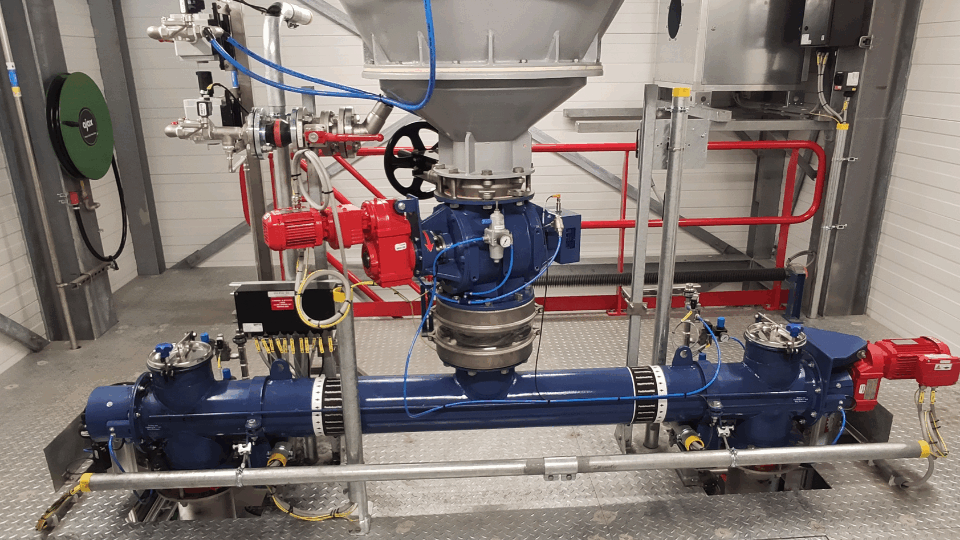
To illustrate
Image: H-AR200 rotary valve and double-exit screw conveyor
- Application: storage, dosing and feeding
- Medium: powdered activated carbon
- Location: biological sewage treatment plant
- Capacity silo: 85 m3
- Scope of supply: design, engineering, supply, construction and commissioning
FAQ's on powdered activated carbon
1. What is powdered activated carbon (PAC)?
Powdered activated carbon is a highly porous adsorbent material used to remove dissolved contaminants, pharmaceutical residues, pesticides and micropollutants from water streams.
2. Why is activated carbon used in water treatment?
Activated carbon adsorbs organic compounds that conventional biological treatment processes often cannot remove effectively, improving overall water quality.
3. What are the biggest handling challenges of activated carbon?
The main challenges include dust generation, low bulk density, poor flow behaviour, accurate dosing, pneumatic conveying and ATEX compliance.
4. Why is slurry preparation important?
A well-prepared slurry ensures consistent dosing and optimal adsorption performance. Poor slurry preparation can reduce treatment efficiency and cause operational problems.
5. How can activated carbon be dosed accurately?
Accurate dosing requires a combination of reliable silo discharge, controlled feeding equipment, properly designed conveying systems and consistent slurry preparation.
TBMA are specialists in the design and supply of components and systems for bulk solids handling. Our extensive range of high quality processing equipment is suitable for handling powders and granules with proven reliability in practice in a variety of processing industries. The highly qualified and experienced TBMA staff are well able to translate your requirements into the right execution and application of our components. We also offer the design and execution of complete projects, thus providing you with an efficient, reliable and sustainable solution for your process.
How can we help you?